
Epson supports YUIMA NAKAZATO at Paris Haute Couture Week
At this year’s Paris Haute Couture Week fashion brand YUIMA NAKAZATO unveiled its latest couture Spring/Summer 2026 collection “SILENT”. As a co-creation partner, Epson provided technical support throughout the making of the collection.

Garments from the YUIMA NAKAZATO Spring/Summer 2026 collection “SILENT” at Paris Haute Couture Week
Through garments printed using Epson’s digital textile printing technology, as well as ceramic pieces separately created through more than 1,500 hours of clay work, designer Yuima Nakazato expressed the timeless beauty of Yakushima’s nature.
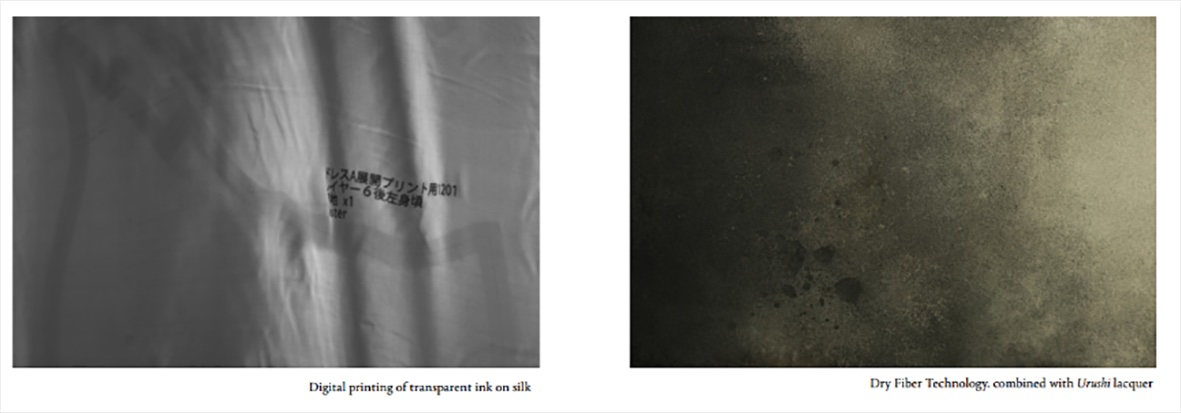
By printing transparent ink onto white silk Organdy1, Epson and Mr. Nakazato discovered that natural fibre fabrics have minimal fraying when cut*, opening up new possibilities in garment assembly.
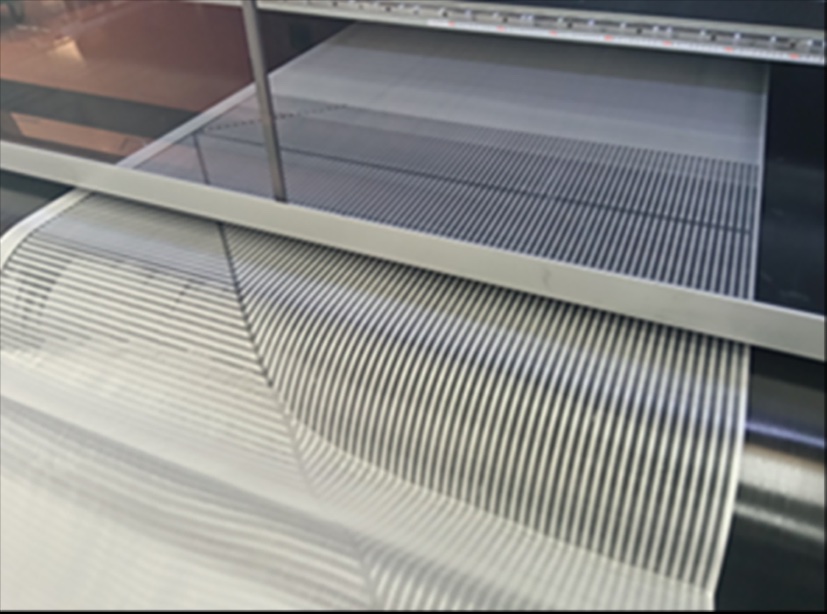
This approach simplifies edge finishing while accentuating the fabric’s delicate texture and sharp visual aesthetic, resulting in an unprecedented form of expression. The collection also explores a new approach to heel shoes: using Dry Fibre Technology (DFT), recycled non-woven fabric sheets made from used garments and mill ends were finished with Urushi lacquer, a traditional Japanese craft and tin powder to achieve a unique texture.
Epson and fashion designer Yuima Nakazato entered into a partnership in 2022 and continue to collaborate exploring new possibilities in sustainable fashion by combining creativity with environmental responsibility.
Epson aims to reduce the environmental impact of clothing production in the fashion industry by transforming the value chain through more efficient technology, workflow innovation, technical research and implementing an optimum mode of production that can provide more personalised designs than the conventional method of mass-producing the same designs.
YUIMA NAKAZATO's goal is to bring the joy of one-of-a-kind garments to people around the world.
The Epson digital technology that is used in the production of creative works by YUIMA NAKAZATO is cleaner than traditional textile printing because it uses less water, results in less waste and can be used to produce only the volume of items needed.
Moreover, the pigment inks used do not require steaming or washing treatments after printing.